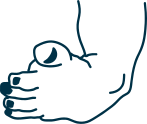
Why Do Some Children Develop Flat Feet?
For many children, flat feet are simply part of normal growth and development. In others, the condition may be influenced by factors that affect the structure and function of the foot.
Possible contributing factors include:
- Natural ligament flexibility.
- Family history of flat feet.
- Variations in foot structure.
- Conditions affecting muscles or joints.
- Tendon-related abnormalities.

Treatment & Management
One of the most important things for parents to know is that many children with flat feet do not require treatment. Because the arches continue developing throughout childhood, monitoring may be all that is needed in children who are symptom-free.
When symptoms are present, treatment focuses on improving comfort, supporting movement, and reducing strain on the feet and legs.
Management options include:
- Supportive footwear.
- Custom or prefabricated orthotic inserts.
- Stretching and strengthening exercises.
- Physical therapy.
Surgical treatment is rarely necessary and is generally reserved for more complex cases that do not respond to conservative management.
The Long-Term Outlook
The outlook for children with flat feet is generally excellent. Most children remain active, participate fully in sports and physical activities, and experience no long-term limitations.
For children who develop symptoms, early assessment can help identify the most appropriate support strategies and ensure healthy musculoskeletal development as they grow.
Why Choose Danat Al Emarat?
Not every child with flat feet needs treatment, but understanding when symptoms warrant further evaluation can provide valuable reassurance for families. Our pediatric orthopedic team works closely with parents to assess each child's development, answer questions, and provide personalized care that supports healthy movement, comfort, and confidence as children grow.