Signs & Symptoms of Club Foot
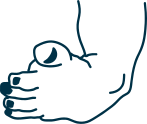
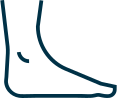
Club foot is usually diagnosed shortly after birth because of its characteristic appearance.
Common signs include:
- One or both feet turning inward and downward.
- A foot that appears shorter or more rigid than normal.
- Limited range of motion at the ankle.
- Tightness in the foot and lower leg.
- Differences in calf muscle size on the affected side.
The severity of the condition can vary from child to child.

Treatment for Club Foot
Early treatment is one of the most important factors in achieving successful outcomes.
The goal is to gradually correct the position of the foot and support normal growth and development.
Treatment may include:
- Serial casting: A gentle technique that gradually repositions the foot through a series of casts changed over several weeks.
- Tendon release procedure (tenotomy): A minor procedure sometimes performed to improve flexibility and correction.
- Bracing: Special braces worn after correction to maintain alignment and reduce the risk of recurrence.
In the vast majority of cases, club foot can be successfully treated without major surgery.
Long-Term Outlook
The outlook for children with club foot is highly positive, particularly when treatment begins early.
Most children achieve excellent foot function and are able to walk, run, play sports, and participate fully in daily activities. Regular follow-up appointments throughout childhood help ensure correction is maintained and allow any recurrence to be addressed promptly.
Why Choose Danat Al Emarat?
A diagnosis of club foot can feel overwhelming for parents, but effective treatment is available and outcomes are often excellent. Our pediatric orthopedic team provides expert, family-centered care from diagnosis through treatment and follow-up, helping children build a strong foundation for healthy movement and development as they grow.