
Media Center
Blog
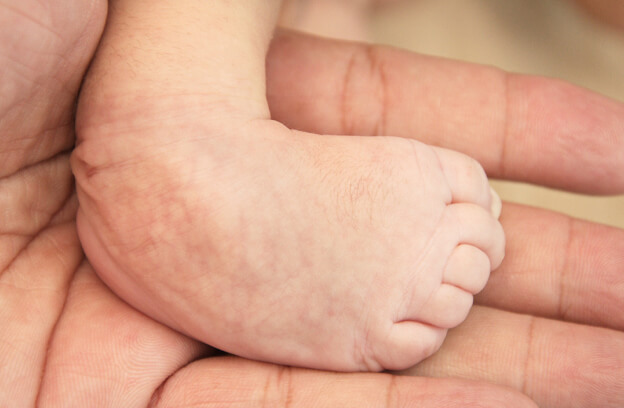
Seeing your baby's foot turned inward at birth can be concerning, but club foot is a common condition that can be treated very successfully when identified early.
Club foot, medically known as congenital talipes equinovarus (CTEV), is a condition present at birth in which one or both feet are twisted out of their normal position. The affected foot typically turns inward and downward due to tight muscles, tendons, and ligaments around the foot and ankle.
With early diagnosis and appropriate treatment, most children with club foot go on to walk, run, play, and participate in everyday activities without significant limitations.
At Danat Al Emarat, our pediatric orthopedic specialists provide comprehensive assessment and personalized treatment plans designed to support healthy growth, mobility, and long-term foot function.
The exact cause of club foot is not always known, but it is thought to result from a combination of genetic and developmental factors during pregnancy.
Possible contributing factors include:
In many cases, club foot occurs in otherwise healthy children with no identifiable underlying cause.
Club foot is usually diagnosed shortly after birth because of its characteristic appearance.
Common signs include:
The severity of the condition can vary from child to child.
Without treatment, club foot can impact the way a child stands, walks, and balances as they grow.
Children may walk on the outer edge or even the top of the foot, which can lead to difficulties with mobility and physical activity over time. Early treatment helps prevent these challenges and supports normal movement and development.
Club foot is typically diagnosed through a physical examination shortly after birth.
In some cases, the condition may also be identified during pregnancy through prenatal ultrasound.
Additional investigations are not usually necessary unless specialists suspect an associated condition or need further information about the severity of the deformity.
Early treatment is one of the most important factors in achieving successful outcomes.
The goal is to gradually correct the position of the foot and support normal growth and development.
Treatment may include:
In the vast majority of cases, club foot can be successfully treated without major surgery.
The outlook for children with club foot is highly positive, particularly when treatment begins early.
Most children achieve excellent foot function and are able to walk, run, play sports, and participate fully in daily activities. Regular follow-up appointments throughout childhood help ensure correction is maintained and allow any recurrence to be addressed promptly.
A diagnosis of club foot can feel overwhelming for parents, but effective treatment is available and outcomes are often excellent. Our pediatric orthopedic team provides expert, family-centered care from diagnosis through treatment and follow-up, helping children build a strong foundation for healthy movement and development as they grow.

We partner with prominent health insurers to offer healthcare coverage for our patients.

Conveniently located in Rabdan, Abu Dhabi, offers a welcoming environment for women and children seeking exceptional healthcare.

We offer variety of rooms and services to suit your needs and requirements.

Reach out to us across any of our channels.


